2015 and 2016 global temperatures: a “what-if” exercise

It’s hardly news to predict that 2015 is almost certain to break the global surface temperature record.

2015-10-12_12-24-30

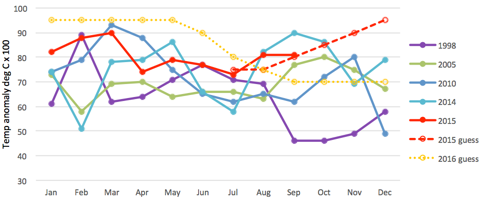
The data in this graph are the latest NASA GISS monthly temperature anomalies (1951-1980 baseline), shown in solid lines, while the dashed and dotted lines are from the hitherto little-known future temperature series known as ANDY GUESS, updated in July 2015. I’m not attempting any serious forecasting here, just indulging in a what-if exercise. Note that my starting point in July is a little above the actual GISS value, for that month, this is because NASA subsequently tweaked their data a little. I have just selected a few recent hot years for comparison in this graph.

Basically, I have assumed that the current El Niño will persist until the end of the year, that its effects on global temperatures will lag by six months or so and that this El Niño will run a little hotter than recent ones. I just wanted to see how these guesses would play out for average global temperatures in 2015 and 2016.  The result is shown below.

Continue reading

B.C. lowballing fugitive methane emissions from natural gas industry

This was first published at Corporate Knights. I have added in this re-post some footnotes with details of calculations along with comments and references below the main article. I have also done a rough estimation of the emissions associated with the addition of one 18 million tonne per year LNG project (excluding end-use emissions) and the effect that this will have on BC’s emissions targets.


Photo by Jesús Rodríguez Fernández (creative commons)

The push by British Columbia to develop a new liquefied natural gas (LNG) export industry raises questions about the impact such activities would have on greenhouse gas emissions, both within the province and globally.

One of the single most important factors relates to the amount of methane and carbon dioxide that gets released into the atmosphere, either deliberately through venting or by accident as so-called fugitive emissions. Fugitive emissions are the result of valves and meters that release, by design, small quantities of gas. But they can also come from faulty equipment and from operators that fail to follow regulations.

According to the B.C. Greenhouse Gas Inventory Report 2012, there were 78,000 tonnes of fugitive methane emissions [1] from the oil and natural gas industry that year. B.C. produced 41 billion cubic metres of gas in 2012 [2]. This means about 0.28 per cent of the gas produced was released into the atmosphere [3].

By North American standards, this is a very low estimate. The U.S. Environmental Protection Agency (EPA) uses a figure of 1.5 per cent leakage [4], more than five times higher. Recent research led by the U.S. non-profit group, Environmental Defense Fund (EDF), shows that even the EPA estimates may be too low by a factor of 1.5 [5]. B.C.’s estimate, in other words, would be about one-eighth of what has been estimated for the American gas industry.
Continue reading

Carbon cycle feedbacks and the worst-case greenhouse gas pathway

Originally published at Skeptical Science on July 7, 2015

Summary

The worst-case emissions pathway, RCP8.5, is a scenario that burns a huge amount of fossil fuels, especially coal. The model has sometimes been criticized as implausible because of its huge resource consumption and emissions of ~1700 billion tonnes of carbon (GtC) over the century. Those emissions are based in part on carbon cyclemodel assumptions, which recent work suggests may be too optimistic. New research shows that future plant growth may be restricted by nutrient availability, turning the land carbon sink into a source. Also, permafrost feedbacks (not considered in IPCC CMIP5 models) may also add significant emissions to the atmosphere under the RCP8.5 pathway. In addition, the latest research on the Amazon Basin reveals that the tropical forest carbon sinks may already be diminishing there. Together, these feedbacks suggest that the greenhouse gas concentrations in the RCP8.5 case could be achieved with ~400 GtC smaller human emissions, making the RCP8.5 worst-case scenario more plausible.

The climate models referred to  in the recent IPCC Fifth Assessment Report (AR5) are founded on one of four Representative Concentration Pathways or RCPs. The key word in RCP is concentration. In the RCPs, the concentration of greenhouse gases is fixed at different times in the future and the climate model (or general circulation model or GCM) uses those atmospheric concentrations to calculate future climate states. Underpinning the concentration pathways are socio-economic and emissions scenarios. There can be more than one underlying emissions scenario capable of producing the concentration pathway.

If you are unfamiliar with RCPs, check out the great guide that Graham Wayne wrote in August 2013 for Skeptical Science.

This way of modelling differs from previous approaches in which the starting point was a story or scenario about economic and social development that led to emissions. These emissions are run through a carbon-cycle model (which may be simple or complex) to produce atmospheric concentrations over time.

The schematic illustrates the differences in approach. The elements in red boxes are the prescribed inputs into the models, whereas the elements in blue ellipses are outputs. The advantage of the RCP prescribed-concentration approach is that the climate model outputs do not depend to the same degree on carbon-cycle models as they did in the emissions scenario method. The disadvantage is that there is no unique link between concentrations and emissions. The schematic is simplified in that there are feedbacks and loops in the processes that are not illustrated. Continue reading

Are we overestimating our global carbon budget?

Research on carbon-cycle feedbacks suggests we have less wiggle room to turn the climate ship around.

(First published at Corporate Knights on July 7, 2015.)


Illustration by Yarek Waszul

The latest research suggests that natural sinks of carbon on land may be slowing or even turning into sources, creating climate consequences potentially worse than first thought.

Nature has provided humans with a buffer against the worst effects of our carbon pollution. Since 1750, we have emitted about 580 billion tonnes of carbon into the atmosphere by burning fossil fuels, cutting down forests and making cement. If those emissions had simply accumulated in the air, the concentration of carbon dioxide would have increased from 280 parts per million (ppm), as it was before the Industrial Revolution, to about 550 ppm today. Instead, we currently measure around 400 ppm, which is still a whopping 40 per cent above the planet’s pre-industrial atmosphere, but much less than a doubling.

Some 60 per cent of our emissions have been taken up in natural sinks by, in roughly equal parts, dissolving into the ocean and by being taken up by plants growing faster on land. Were it not for these natural carbon sinks, we would by now be much deeper into dangerous climate change.

As we continue to burn fossil fuels, our climate troubles will become worse should those sinks start to falter. And the outlook will be worse still if those sinks turn into sources of carbon.

Continue reading

Permafrost feedback update 2015: is it good or bad news?

This article was originally posted at Skeptical Science on April 20th, 2015

We have good reason to be concerned about the potential for nasty climate feedbacks from thawing permafrost in the Arctic. Consider:

  • The Arctic contains huge stores of plant matter in its frozen soils. Over one-third of all the carbon stored in all of the soils of the Earth are found in this region, which hosts just 15% of the planet’s soil-covered area.
  • The Arctic is warming at twice the rate of the rest of the planet. The vegetable matter in the soils is being taken out of the northern freezer and placed on the global kitchen counter to decompose. Microbes will take full advantage of this exceptional dining opportunity and will convert part of these plant remains into carbon dioxide and methane.
  • These gases will add to the already enhanced greenhouse effect that caused the Arctic warming, providing a further boost to warming. There’s plenty of scope for these emissions to cause significant climatic mischief: the amount of carbon in the permafrost is double the amount currently in the air.

But exactly how bad will it be, and how quickly will it cause problems for us? Does the latest research bring good news or bad?

Ted Schuur and sixteen other permafrost experts have just published a review paper inNature: Climate change and the permafrost feedback (paywalled). This long and authoritative article (7 pages of text, plus 97 references) provides a state-of-the-art update on the expected response of permafrost thawing to man-made climate change. Much of the work reported on in this paper has been published since the 2013 IPCC AR5 report. It covers new observations of permafrost thickness and carbon content, along with laboratory experiments on permafrost decomposition and the results of several modelling exercises.

The overall conclusion is that, although the permafrost feedback is unlikely to cause abrupt climate change in the near future, the feedback is going to make climate change worse over the second half of this century and beyond. The emissions quantities are still uncertain, but the central estimate would be like adding an additional country with the unmitigated emissions the current size of the United States’ for at least the rest of the century. This will not cause a climate catastrophe by itself, but it will make preventing dangerous climate change that much more difficult. As if it wasn’t hard enough already.

Observations

There’s a lot of information in this paper and, rather than attempt to describe it all in long form, I’ll try to capture the main findings in bullet points.

  • The top three metres of permafrost contain about 1035 PgC (billion tonnes of carbon). This is similar to previous estimates, but is now supported by ten times as many observations below the top 1 m depth. Very roughly, the deepest deposits richest in carbon are near the Russian, Alaskan and Canadian Arctic coasts, with the poorest in mountainous regions and in areas close to glaciers and the Greenland ice sheet.
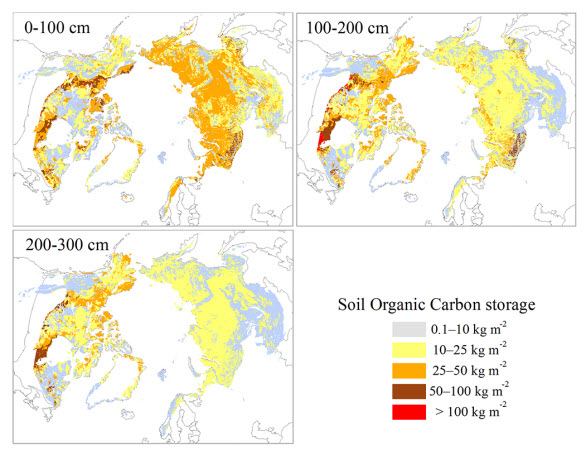
perm4The carbon content in the top three metres of permafrost soils. From Hugelius et al (2013).

Continue reading

Skeptical Science is running a MOOC

The volunteers at Skeptical Science, along with staff at the University of Queensland, have been busy over the past several months putting together a Massive Open Online Course (MOOC) on climate change. The course, Making Sense of Climate Science Denial, starts on April 28th and is free to anyone who wants to participate. It will last for seven weeks and will require an hour or two of attention every week.

The University of Queensland has a press release.

Thousands of people have already signed up, but we are hoping for many more. Learning will not just come from watching the many short video lectures we have prepared, but from discussions with fellow students. So, no matter what your level of knowledge, or  your point of view on man-made climate change might be, please join us. I’m looking forward to learning from this course, too.

All anyone needs is an Internet connection, a desire to learn and share your knowledge, and an ability to understand English spoken in American, British, Canadian and Australian accents.

Watch the trailer:

Continue reading

Shell: internal carbon pricing and the limits of big oil company action on climate

Originally posted at Skeptical Science on March 24th, 2015.

Shell evaluates all of its projects using a shadow carbon tax of $40 per tonne of carbon dioxide. That’s great. But why is the company still exploring in the Arctic and busy exploiting the Alberta oil sands?

Of all of the big fossil-fuel companies, Shell has adopted perhaps the most constructive position on climate change mitigation. Recently, the company’s CEO, Ben van Buerden told an industry conference:

You cannot talk credibly about lowering emissions globally if, for example, you are slow to acknowledge climate change; if you undermine calls for an effective carbon price; and if you always descend into the ‘jobs versus environment’ argument in the public debate.

Shell employs engineer David Hone as their full-time Climate Change Advisor. Hone has written a small ebook Putting the Genie Back: 2°C Will Be Harder Than We Think, priced at just 99¢ and he writes a climate change blog that should be part of every climate-policy geek’s balanced diet.

Shell also has a position they call Vice President CO2, currently occupied by Angus Gillespie. Here’s Gillespie talking recently at Stanford on the company’s internal shadow carbon pricing strategy (hat-tip to John Mashey). It’s worth watching if only for Gillespie’s vivid example of the limitations of looking at averages. The slides can be downloaded here.

Continue reading

Fracking 3: Quantity has a quality all of its own

The essential characteristic of shale gas is that the resource volume is often huge and the magnitude and effort required to extract it is correspondingly enormous. What attracts the fossil fuel companies is the same thing that alarms people living near the shale gas resource. It worries those of us who are concerned about dangerous climate change, as well.

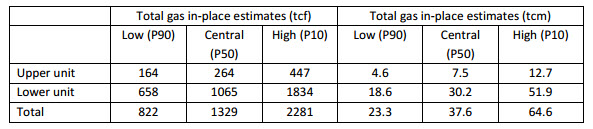
In 2013, the British Geological Survey (BGS) published an assessment on the gas resources of the Bowland Shale in northern England. They concluded that the median gas-in-place resource was 1329 trillion cubic feet. To put this in perspective, this is about 16 times the amount of gas produced  from the UK North Sea over 50 years. The BGS did not estimate the recoverable gas resource, because they considered that the recovery factors are too uncertain to quantify.

How much drilling would it take to exploit this resource?

Continue reading

Fracking 2: There’s no endorsement of fracking from Skeptical Science or climate experts

The blog Skeptical Science is mainly concerned with “Explaining climate change science & rebutting global warming misinformation” and is mostly devoted to debunking the often nonsensical and incoherent notions that dispute the physical science of climate change. Occasionally though, the contributors to the blog—including me—write about solutions and policy. When we write about energy matters, we tend to focus on climate effects, but not so much on things like aquifer pollution from unconventional oil and gas operations.

In a blog post he titled Global warming believers for natural gas, Nick Grealy claimed that a post on Skeptical Science discussing the famous 2004 “wedges ” paper by Pacala and Socolow somehow endorsed the greatly expanded use of unconventional natural gas. just because it mentioned that one of Pacala and Socolow’s 15 wedges was about gas substituting for coal. Dana Nuccitelli quickly put him right in the comments.

Recently, Skeptical Science has run a series of posts about the recent research on fugitive methane releases from oil and gas operations. These include:

To frack or not to frack?

Methane emissions from oil and gas development

More research confirming methane leakage from shale boom

I also have written on British Columbia’s suspiciously low self-reported fugitive emissions. I published that work on this blog rather than on Skeptical Science, because this particular issue has a local rather than global focus.

Skeptical Science does not endorse fracking and the contributors there have consistently expressed concerns that fugitive emissions of methane may erode the emissions advantage that gas has over coal. Continue reading

Fracking 1: Spot the Charlatan

Shale Gas Guru,  Missionary and blogger Nick Grealy has been running a blog on fracking since 2008. I used to follow it with interest in the early days because he provided some perspective and useful links to studies on what was then an emerging technology. He seemed to be a bit too gung-ho about the prospects for shale gas in Europe, but nobody knew at the time how things would unfold. On the rare occasions when I stumble across the blog now, I can’t help noting an air of desperation and a frequent resort to name calling at those opposed to shale gas, perhaps because the much-anticipated frack bonanza in Europe seems to have fizzled, due to a combination of geology and popular opposition.

2014-12-26_17-19-37

For evidence of desperation, consider that Grealy has founded a company—London Local Energy —that has plans to frack under Downing Street. I’m inclined to dismiss this as a publicity stunt or even just a joke. Readers who disagree might want to go to the company’s website to find out how to invest. There should be some actual content there any day now. Perhaps Grealy will lay out the engineering and economics of multi-kilometre extended reach wells with multiple hydraulic fracturing stages. On the bright side, he probably won’t get any NIMBY objections from the current occupant of No 10.

[Added later: check out David Smythe’s blog for more details on the frack London concept.] Continue reading

the urban prehistorian

the contemporary archaeology of prehistory

The Grumpy Geophysicist

A grumpy view of earth science and the world

A Progressive Rake

Funnies, rants, and quite a lot of gin

EssaysConcerning

Essays, musings & missives - concerning science, art & society

NixonScan

Culture & Natural Heritage

Stephen Leahy, International Environmental Journalist

Discovering Global Environmental Interconnections

The Mountain Mystery

Just 50 years ago, no one knew why the Earth has mountains. Now we do. This is the story of how we figured it out - and how we keep learning.

Understanding Climate Risk

Science, policy and decision-making

Small Epiphanies

A BLOG BY G.P. WAYNE

P.J. Partington

Thoughts on climate policy in Canada and around the world

@KenCaldeira

Environmental science of climate, carbon, and energy

The Practical Utopian

The World of Guy Dauncey

a minority of one

film reviews and related ramblings

Musings on Quantitative Palaeoecology

Once you have finished counting diatoms, the real fun begins

Kai Nagata

Writer / Videographer

HotWhopper

Reflections on the refractory problems of climate and energy

Real Skeptic

Ventures into skepticism

ClimateSight

Climate science from the inside

...and Then There's Physics

likhipa inhlanzi emanzini