The history of emissions and the Great Acceleration

One of my pastimes is downloading data and playing around with it on Excel. I’m not kidding myself that doing this means anything in terms of original research, but I do find that I learn quite a lot about the particularities of the data and about the science in general by doing some simple calculations and graphing the numbers. There’s even occasionally a small feeling of discovery, a bit like the kind that you experience when you follow a well-trodden path in the mountains for the first time:

We were not pioneers ourselves, but we journeyed over old trails that were new to us, and with hearts open. Who shall distinguish? J. Monroe Thorington

Anyway, I downloaded some historical emissions data from the CDIAC site and played around with it. To repeat, there’s nothing new to science here, but there were a few things that I found that were new to me. First, let’s look at historical emissions of CO2 from man-made sources from 1850 to 2010. Note that for all of these graphs there are no data shown for 2011-2015.

emm1
What immediately struck me—something I hadn’t fully appreciated before—was how small oil consumption was before 1950. Both world wars were carried out without huge increases in oil use, despite the massive mobilizations of armies, navies and air forces. You can make out some downward blips in coal consumption for the Great Depression (~1930) and around the end of WW2 (~1945).

It wasn’t until after 1950 that fossil-fuel consumption went nuts. Some people have taken to calling this inflection point The Great Acceleration, there’s more on this later. Continue reading

Shell: internal carbon pricing and the limits of big oil company action on climate

Originally posted at Skeptical Science on March 24th, 2015.

Shell evaluates all of its projects using a shadow carbon tax of $40 per tonne of carbon dioxide. That’s great. But why is the company still exploring in the Arctic and busy exploiting the Alberta oil sands?

Of all of the big fossil-fuel companies, Shell has adopted perhaps the most constructive position on climate change mitigation. Recently, the company’s CEO, Ben van Buerden told an industry conference:

You cannot talk credibly about lowering emissions globally if, for example, you are slow to acknowledge climate change; if you undermine calls for an effective carbon price; and if you always descend into the ‘jobs versus environment’ argument in the public debate.

Shell employs engineer David Hone as their full-time Climate Change Advisor. Hone has written a small ebook Putting the Genie Back: 2°C Will Be Harder Than We Think, priced at just 99¢ and he writes a climate change blog that should be part of every climate-policy geek’s balanced diet.

Shell also has a position they call Vice President CO2, currently occupied by Angus Gillespie. Here’s Gillespie talking recently at Stanford on the company’s internal shadow carbon pricing strategy (hat-tip to John Mashey). It’s worth watching if only for Gillespie’s vivid example of the limitations of looking at averages. The slides can be downloaded here.

Continue reading

Have we turned the corner on emissions?

One of these days, the world will get its act together and halt the growth in CO2 emissions. This week, the International Energy Agency reported that the rise in emissions did indeed stall in 2014. According to the announcement, this was the first time in forty years that IEA emissions did not increase, except in years of economic weakness.

When we start to turn the emissions corner for good, this is what it will look like. Although halting emissions growth does not yet put us on the path to meeting the 2°C target, it does at least mean that we might not be destined to follow the business-as-usual path to disaster along the worst-case RCP8.5 pathway. At least we are not going as fast along that road.

Chris Mooney, Climate Nexus and Joe Romm have articles on this, all worth reading.

The IEA announcement was a teaser: we are going to have to wait until June 15, 2015 to see the details of the analysis. In the meantime, I thought it would worthwhile looking at some data to see how confident we can be that this really is a positive signal that we can discern out of the noise and uncertainty.

First, let’s plot year-to-year growth in CO2 emissions, along with global GDP growth, against time:

IEA1

Continue reading

Does providing information on geoengineering reduce climate polarization?

This article was originally published at Skeptical Science on March 4, 2013.

Dan Kahan of Yale University and four colleagues have just published an article in Annals of the AAPS titled: Geoengineering and Climate Change Polarization Testing a Two-Channel Model of Science Communication that investigates the effect on study participants’ attitudes to climate change after reading an article about geoengineering. In their abstract, they write:

We found that cultural polarization over the validity of climate change science is offset by making citizens aware of the potential contribution of geoengineering as a supplement to restriction of CO2 emissions.

I will argue here that this experiment achieved no such result because the premise was wrong. Specifically, the information on geoengineering that was presented to the study participants (in the form of a fictional newspaper article) bears no relation to mainstream scientific opinion on geoengineering nor, even, to the opinions of advocates of geoengineering. Geoengineering is portrayed in the fictional newspaper article as a strategy with no uncertainty about how well it might work and, it is claimed, will “spare consumers and businesses from the heavy economic costs associated with the regulations necessary to reduce atmospheric CO2 concentrations to 450 ppm or lower”. This is hardly depicting geoengineering as a “potential solution” or “a supplement” to the restriction of emissions, as is claimed in the abstract of the paper.

In fact, what Kahan et al. have demonstrated is that presenting misinformation dressed up as fact can affect people’s opinions about climate change. That may be interesting as a social science experiment conducted on consenting adults, but it is not much use as a guide to effective public science communication, constrained as it is to tell the truth.
Continue reading

Fracking 3: Quantity has a quality all of its own

The essential characteristic of shale gas is that the resource volume is often huge and the magnitude and effort required to extract it is correspondingly enormous. What attracts the fossil fuel companies is the same thing that alarms people living near the shale gas resource. It worries those of us who are concerned about dangerous climate change, as well.

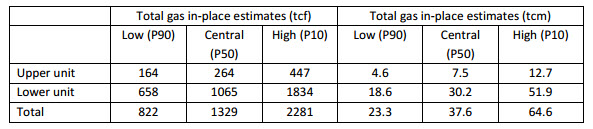
In 2013, the British Geological Survey (BGS) published an assessment on the gas resources of the Bowland Shale in northern England. They concluded that the median gas-in-place resource was 1329 trillion cubic feet. To put this in perspective, this is about 16 times the amount of gas produced  from the UK North Sea over 50 years. The BGS did not estimate the recoverable gas resource, because they considered that the recovery factors are too uncertain to quantify.

How much drilling would it take to exploit this resource?

Continue reading

Fracking 2: There’s no endorsement of fracking from Skeptical Science or climate experts

The blog Skeptical Science is mainly concerned with “Explaining climate change science & rebutting global warming misinformation” and is mostly devoted to debunking the often nonsensical and incoherent notions that dispute the physical science of climate change. Occasionally though, the contributors to the blog—including me—write about solutions and policy. When we write about energy matters, we tend to focus on climate effects, but not so much on things like aquifer pollution from unconventional oil and gas operations.

In a blog post he titled Global warming believers for natural gas, Nick Grealy claimed that a post on Skeptical Science discussing the famous 2004 “wedges ” paper by Pacala and Socolow somehow endorsed the greatly expanded use of unconventional natural gas. just because it mentioned that one of Pacala and Socolow’s 15 wedges was about gas substituting for coal. Dana Nuccitelli quickly put him right in the comments.

Recently, Skeptical Science has run a series of posts about the recent research on fugitive methane releases from oil and gas operations. These include:

To frack or not to frack?

Methane emissions from oil and gas development

More research confirming methane leakage from shale boom

I also have written on British Columbia’s suspiciously low self-reported fugitive emissions. I published that work on this blog rather than on Skeptical Science, because this particular issue has a local rather than global focus.

Skeptical Science does not endorse fracking and the contributors there have consistently expressed concerns that fugitive emissions of methane may erode the emissions advantage that gas has over coal. Continue reading

Fracking 1: Spot the Charlatan

Shale Gas Guru,  Missionary and blogger Nick Grealy has been running a blog on fracking since 2008. I used to follow it with interest in the early days because he provided some perspective and useful links to studies on what was then an emerging technology. He seemed to be a bit too gung-ho about the prospects for shale gas in Europe, but nobody knew at the time how things would unfold. On the rare occasions when I stumble across the blog now, I can’t help noting an air of desperation and a frequent resort to name calling at those opposed to shale gas, perhaps because the much-anticipated frack bonanza in Europe seems to have fizzled, due to a combination of geology and popular opposition.

2014-12-26_17-19-37

For evidence of desperation, consider that Grealy has founded a company—London Local Energy —that has plans to frack under Downing Street. I’m inclined to dismiss this as a publicity stunt or even just a joke. Readers who disagree might want to go to the company’s website to find out how to invest. There should be some actual content there any day now. Perhaps Grealy will lay out the engineering and economics of multi-kilometre extended reach wells with multiple hydraulic fracturing stages. On the bright side, he probably won’t get any NIMBY objections from the current occupant of No 10.

[Added later: check out David Smythe’s blog for more details on the frack London concept.] Continue reading

AGU Fall Meeting 2014 poster presentation

I gave a poster presentation on December 16th  at the 2014 Fall Meeting of the American Geophysical Union in San Francisco. The title is: Emissions of Water and Carbon Dioxide from Fossil-Fuel Combustion Contribute Directly to Ocean Mass and Volume Increases.

You can read the abstract here and I have uploaded a pdf of the poster here. There is a picture of the poster below, click on it to make it readable, although you will need to download the pdf to make out some of the fine print.

Poster2014a

Continue reading

Dreadful GSA blogpost by Canadian geologists

Geologists, especially those, like me, of a certain age, often have problems with climate science and the idea that humans may be triggering a massive and abrupt change in the climate. Global change, we were taught, occurred slowly and by commonplace mechanisms: sediment carried by water, deposited a grain at a time: erosion effected by water and wind, the hardest rocks slowly ground down crystal by crystal. The great features of the Earth—the canyons, mountains and basins—were built this way and owe their grandeur to Deep Time, geology’s greatest intellectual gift to human culture. In the face of the history of the natural world, geologists feel a certain humility at the insignificance of humans and our tiny lifespans. But we also feel some pride in the role of our subject in piecing together this history from fossils and outcrops of rock. It’s an amazing detective story: diligent scientists patiently working away and uncovering the Earth’s great secrets.


Then climate science comes along and grabs all the headlines. Suddenly, we hear, change is coming fast and the outcome could be ugly. The familiar music of natural geological change is about to be disrupted by a noisy interruption in the form of human intervention. To add insult to injury, many of the people delivering this disruptive message do not seem—at least to some geologists—to be sufficiently deferential to the extensive knowledge about the slow and cyclic changes in the geological past.

This is quite false, as I found out for myself. My initial reaction many years ago to hearing about climate change was one of disbelief, mixed with a strong suspicion that the climate forecasters had neglected to take the lessons of Earth history into account. I soon found out that I was completely wrong about this. I confess also, as I read the scientific literature, that I learned more about modern geology than I had in many years working as an industrial geoscientist. Unknown to me, immersed in my own areas of specialty, geology had moved on, especially in palaeoclimatology.

Continue reading

Keystone XL: Oil Markets and Emissions

Originally posted at Skeptical Science on September 1st, 2014

  • Estimates of the incremental emission effects of individual oil sands projects like the Keystone XL (KXL) pipeline are sensitive to assumptions about the response of world markets and alternative transportation options.
  • A recent Nature Climate Change paper by Erickson and Lazarus concludes that KXL may produce incremental emissions of 0-110 million tonnes of CO2per year, but the article has provoked some controversy.
  • Comments by industry leaders and the recent shelving of a new bitumen mining project suggest that the expansion of the oil sands may be more transportation constrained and more exposed to cost increases than is sometimes assumed.
  • Looking at the longer-term commitment effects of new infrastructure on cumulative emissions supports the higher-end incremental estimates.

President Obama (BBC) has made it clear that the impact of the Keystone XL (KXL) pipeline on the climate will be critical in his administration’s decision on whether the pipeline will go ahead or not.  However, different estimates of the extra carbon emissions that the pipeline will cause vary wildly. For example, the consultants commissioned by the US State Department estimated that the incremental emissions would be 1.3 to 27.4 million tonnes of CO2 (MtCO2) annually. In contrast, John Abraham, writing in the Guardian (and again more recently), estimated that the emissions would be as much as 190 MtCO2 annually, about seven times the State Department’s high estimate (calculation details here).

The variation in the estimates arises from the assumptions made. The State Department consultants assumed that the extra oil transported by the pipeline would displace oil produced elsewhere, so that we should only count the difference between the life-cycle emissions from the shut-in light oil and those of the more carbon-intensive bitumen. In addition, they estimated that not building KXL would mean that bitumen would instead be transported by rail, at slightly higher transportation costs. Abraham simply totted up all of the production, refining and consumption emissions of the 830,000 barrels per day (bpd) pipeline capacity and did not consider any effect of the extra product on world oil markets.

Neither set of assumptions is likely to be correct. Increasing the supply of any product will have an effect on a market, lowering prices and stimulating demand (consumption) growth. Lower prices will reduce supply somewhere.  The question is: by how much?

An interesting new paper in Nature Climate Change (paywalled, but there is an open copy of an earlier version available here) by Peter Erickson and Michael Lazaruares ,attempts to answer this question. The authors are based in the Seattle office of the Stockholm Environment Institute (SEI).
Continue reading